LIMA, September 16, 2026 — An advertiser walks past a screen every day. They wonder how much it costs, or maybe they’ve already decided they want to buy advertising there. The problem is that, often, between that moment and a sale there are still PDFs, emails and several days of waiting.
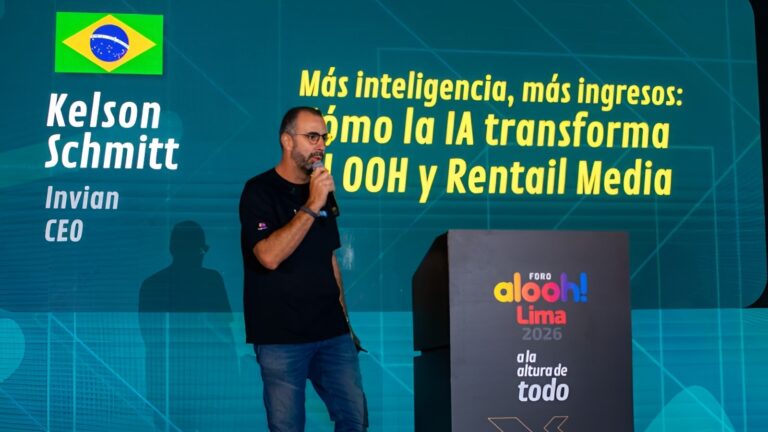
In Lima, Invian took part in the ALOOH Latam 2026 Forum, held September 8–10 under the theme “Up to the challenge”, a statement about how far OOH can go through innovation in measurement and technology. Invian brought the conversation to concrete ground: what if a screen could be bought as easily as any other digital medium?
Kelson Schmitt, Founder & CEO of Invian, addressed this question during his presentation as an guest speaker: OOH inventory can do more than simply be available. It can make it easier for advertisers to access it and turn that intent into a sale.
From ad to purchase, simply
Instagram, Google, TikTok… they all solved the gap between seeing an ad and buying it years ago. In OOH, even as demand keeps growing, that gap still exists, and the friction can be enough for advertisers, especially local ones, to decide not to buy.
That said, the solution is not to put inventory in the hands of another intermediary to compete on price in the same list. As our CEO pointed out, the goal is to “improve sales with their own team” before looking for new clients. And that is the logic behind Invian Ads: to build a back office that allows each inventory to be commercialized through different paths depending on who is buying and how they want to do it, without giving up control over their screens, clients and brand.
For a sales team, for example, a campaign can start with something as simple as a conversation. The salesperson describes what the advertiser is looking for, and Invian Ads turns that information into a proposal in seconds.
But not every purchase needs to go through a salesperson. For local advertisers, the journey can be simplified to the max: from the publisher’s website, WhatsApp or a QR code on the screen itself, the client can check availability without depending on manual sales handling.
And it can also happen that the advertiser isn’t just looking to check availability. In this case, they can describe their campaign, goals, and needs to an AI agent and receive a media plan.
The technology behind the journeys
For those journeys to work, Invian Ads connects three capabilities within the same commercial ecosystem, with AI built in. Each contributes a key piece: understanding the context of the inventory, turning a need into a media plan, and making the purchase easier.
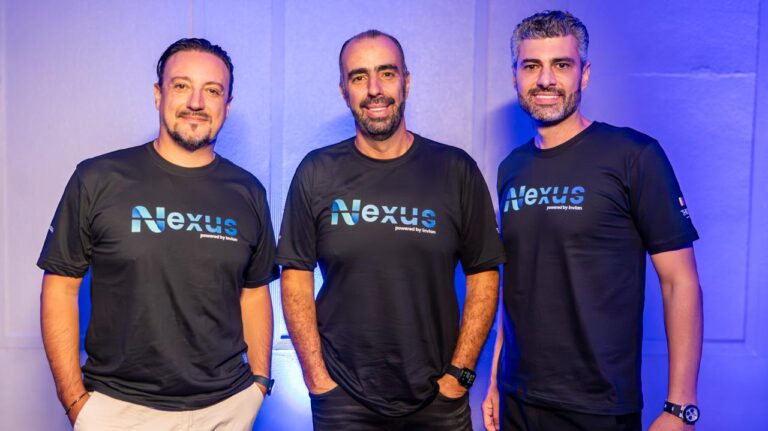
When the context needs to be understood, Nexus brings media intelligence to the inventory. Instead of looking at a screen purely by coordinates, it factors in what’s happening around it: points of interest, businesses, traffic, audience profiles and urban context. That information is cross-referenced to build a Relevance Score that helps explain why a screen might be relevant for a campaign and what sets it apart from another.
When a campaign is described in a conversation, Vektor translates that need into a proposal with a map, photos, estimated profile, investment and the reasoning behind each screen. The result? A media plan in seconds, under the publisher’s brand and in the language needed. The sales team explores it, adjusts it and sends it. In addition, through connectors such as AdCP, that same capability can be made available for agencies and advertisers to plan directly from ChatGPT, Claude or Gemini.
Lastly, when the purchase process requires immediacy, MercaDOOH supports that self-service journey. The advertiser can interact with an LLM to discover inventory and discounts enabled by the publisher, check availability, define dates and budget, select screens and preview their creative, and move towards different payment methods.
What happens next
The plan is not the end of the journey. Once the decision has been made, there is still the order, payment, notifications, collection and payout, steps that, in many digital commercialization models, can end up fragmenting an operation that the publisher already has in place.
Invian Ads integrates with the publisher’s CMS, player and commercial structure, rather than replacing them. The entire operation is centralized in a single dashboard, where it is possible to see what has been sold, what the publisher has already received, what is pending and what is being planned, as well as bring together the demands and proposals generated through its different sales channels.
“We are not talking about something that could happen in a few years. AI is already intervening end to end in OOH sales with our clients. The next step is for the tools to interact with each other and automate even more of that process, without that meaning changing the way the publisher operates its business,” Schmitt said.
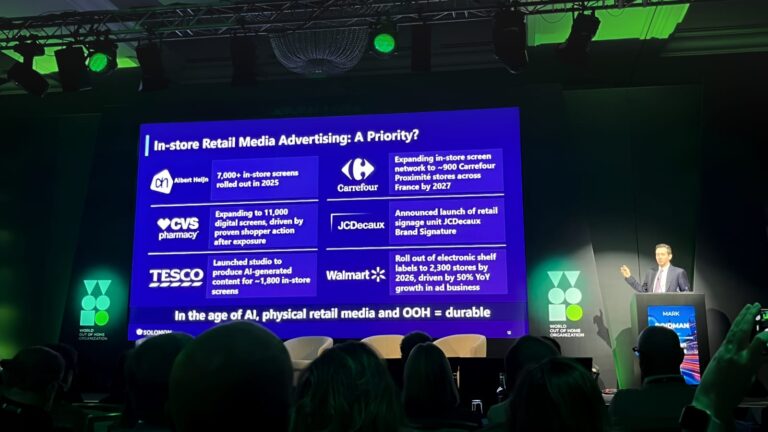
And this is another consideration raised by this model: technology does not need to occupy center stage to transform the way media is commercialized. It can operate in the background while the publisher reaches new types of advertisers and extends its reach to Retail Media, On Site and CTV.
Because “Up to the challenge” also means understanding that true OOH innovation is not about imposing itself on the existing operation, but about giving it the infrastructure, autonomy and liquidity it needs for the medium to grow from its own foundations.
These aren’t concepts on a roadmap: Invian’s engines already run inside the daily operation of publishers today. Those interested in seeing them in action can reach out at Invian Ads.